
There’s a moment every woman reaches eventually. It’s quiet. It’s private. And it usually happens after one more round of a pattern she swore she’d never repeat.
She sits there thinking:
“How am I here again? I’m smart. I’m self‑aware. I’ve done the work. So why does this still keep happening?”
If that’s you, stay with me. Because what you’re about to read might be the first explanation that actually makes sense.
Not the surface‑level stuff. Not the “just set boundaries” advice. Not the “heal your inner child” checklist.
I’m talking about the deeper truth — the one most women never hear — about where the hidden cycle you’re stuck in really started.
And why it’s not your fault.
In This Article
- Episode 38 of The Better You Show
- The Part of You That Knows Better Isn’t the Part Running the Show
- Healing Isn’t Loud. It’s Subtle. And It’s Slow.
- You’re Not Repeating the Pattern Because You’re Weak — You’re Repeating It Because It Worked Once
- Your Nervous System Doesn’t Feel Safe Enough to Change Yet
- Patterns Are Formed in Relationship — So They’re Healed in Relationship
- And Here’s the Part Most Women Never Learn: Some Patterns Didn’t Start With You
- Hypnotherapy Helps You Reach the Part That’s Still Holding On
- If You’re Repeating a Pattern That Makes No Sense, You’re Not Alone
- If You Want Support Understanding Your Pattern
- What This Means for You
- Research Behind This Article
Episode 38 of The Better You Show
This episode of The Better You Show through a conversation with Dr. Lisha Antiqua, Counsellor Shelley, Hypno-coach Tiffany, Coach Doris and Coach Joyce, we explore why awareness alone doesn’t break a pattern, why healing is slower and quieter than people expect, and why some of the cycles you’re living began long before you were born. Finally a peek at what healing actually looks like when you’re ready to stop reliving what hurts.
The Part of You That Knows Better Isn’t the Part Running the Show
Most women who come to BetterYou.coach can explain their patterns with surgical precision. They know the psychology. They know the triggers. They know the history.
But here’s the thing:
The part of you that understands the pattern isn’t the part repeating it.
That’s why awareness feels empowering but doesn’t create change. It’s like knowing the weather forecast but still getting caught in the storm.
Healing happens in a different part of you — the part that learned the pattern in the first place.
And that part doesn’t speak in logic. It speaks in safety.
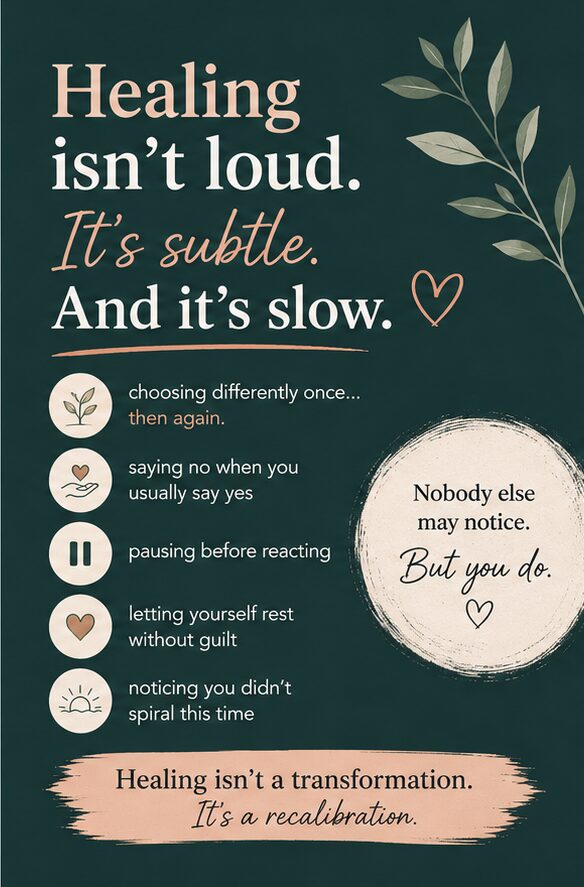
Healing Isn’t Loud. It’s Subtle. And It’s Slow.
Shelley said something in the episode that every woman needs to hear:
“Healing is very quiet and slow. It’s small, tiny pieces.”
— Shelley McInroy
We’re conditioned to expect breakthroughs. We want the dramatic moment. We want the “I’ll never do that again” clarity.
But real healing looks like:
- choosing differently once…then again.
- saying no when you usually say yes
- pausing before reacting
- letting yourself rest without guilt
- noticing you didn’t spiral this time
Nobody else may notice. But you do. And that’s where the shift begins.
Healing isn’t a transformation. It’s a recalibration.
You’re Not Repeating the Pattern Because You’re Weak — You’re Repeating It Because It Worked Once
Every pattern you repeat — even the painful ones — had a purpose once.
People pleasing kept you safe. Overfunctioning kept you valued. Perfectionism kept you in control. Hyper‑independence kept you from being hurt. Staying small kept you from being judged.
These weren’t flaws. They were survival strategies.
And here’s the part most women never hear:
Letting go of a survival strategy can feel like grief.
You’re not just releasing a behavior. You’re releasing the version of you who survived with it.
That’s why change feels scary. That’s why you cling to what hurts. That’s why you repeat what you swore you wouldn’t.
Not because you’re failing. Because you’re human.
Your Nervous System Doesn’t Feel Safe Enough to Change Yet
Dr. Lisha said something that stopped me in my tracks:
“You need to be safe inside yourself.”
— Dr. Lisha Antiqua
Most women don’t realize this, but your nervous system plays a powerful role in shaping your behavior long before your mind does.
If your nervous system doesn’t feel safe:
- you’ll choose familiar over healthy
- you’ll choose predictable over peaceful
- you’ll choose old patterns over new possibilities
Not because you want to. Because your body thinks it’s protecting you.
This is why self‑criticism keeps you stuck. Your nervous system won’t let you change if you’re attacking yourself.
Internal safety isn’t a luxury. It’s the foundation of healing.
Patterns Are Formed in Relationship — So They’re Healed in Relationship
It’s nearly impossible to heal alone. Not because you’re incapable. But because patterns are relational.
They were formed:
- in your family
- in your childhood
- in your early relationships
- in your culture
- in your lineage
So they get activated in relationship. And they get healed in relationship.
Not necessarily romantic relationships. Any safe relationship works:
- a coach
- a therapist
- a hypnotherapist
- a mentor
- a best friend
Healing in isolation isn’t how humans are wired. You’re meant to heal with support.
And Here’s the Part Most Women Never Learn: Some Patterns Didn’t Start With You

This is where the episode goes deeper — and where science confirms what women have felt for generations.
Epigenetics research shows that trauma may influence multiple generations in ways researchers are still working to understand. Not metaphorically. Literally.
Your grandmother’s fear can show up in your nervous system. Your mother’s chaos can show up in your relationships. Your ancestor’s trauma can show up in your patterns.
Joyce said:
“It was grandma. It had nothing to do with me.”
— Joyce Erickson
If you’re repeating a pattern that makes no sense based on your life, your childhood, or your experiences, look at your lineage.
You might be carrying a story that didn’t begin with you.
And here’s the miracle:
Epigenetic patterns can be changed.
Hypnotherapy, EMDR, parts work, and identity‑level coaching can help you access the origin point and release what never belonged to you.
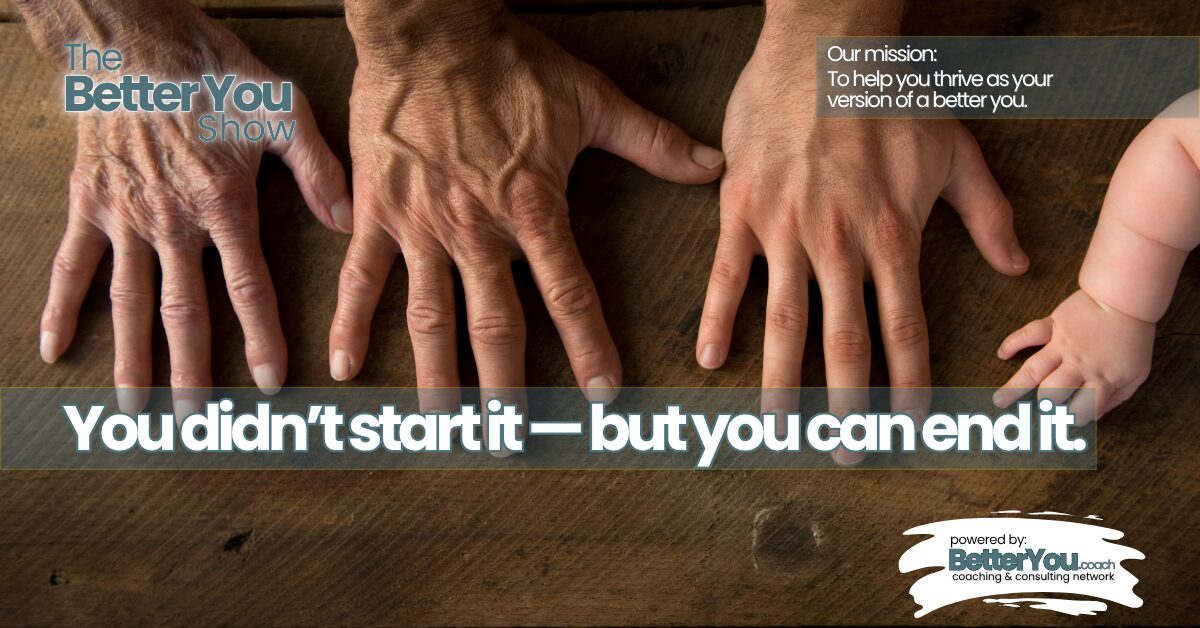
You can be the one who ends the cycle.
Hypnotherapy Helps You Reach the Part That’s Still Holding On
Tiffany explained that hypnotherapy helps you reach the part of you that’s resisting change.
Not the logical part. Not the self‑aware part. The part that’s scared.
Hypnotherapy lets you ask:
- What is this pattern protecting?
- What is it afraid will happen if it lets go?
- What does it need to feel safe enough to change?
When that part feels safe, the pattern finally shifts.
You don’t have to fight yourself. You can work with yourself instead.
If You’re Repeating a Pattern That Makes No Sense, You’re Not Alone

If you’re circling the same relationship, the same fear, the same self‑sabotage, the same emotional loop, and you’re thinking:
“This doesn’t make sense. I’ve never lived this.”
There’s a reason.
And there’s a way out.
You don’t have to keep circling the drain. You don’t have to keep repeating what hurts. You don’t have to keep doing this alone.
If You Want Support Understanding Your Pattern
A connection call is the easiest place to start. It’s a simple, free conversation with someone who can help you understand what’s actually happening and what kind of support would fit your life, your personality, and your goals.
No pressure. No commitment. Just a path forward.
Start here: https://betteryou.coach/start
The form you have selected does not exist.
What This Means for You
If you’re repeating a pattern you don’t understand, it’s not because you’re failing. It’s because the part of you that learned that pattern hasn’t healed yet.
And some of those patterns didn’t even start with you.
You can heal. You can change. You can break the cycle.
And you deserve to.
You matter. Please take care.
Research Behind This Article
Baumeister, R. F., & Muraven, M. (2000). Self Regulation and Depletion: The Strength Model of Self Control. Journal of Personality and Social Psychology. Explains how self control functions like a muscle that tires with use, clarifying why awareness alone doesn’t break patterns.
Wood, W., & Neal, D. T. (2007). A New Look at Habits and the Habit–Goal Interface. Psychological Review. Demonstrates that behavior is often driven by context and automaticity, not just insight or intention.
van der Kolk, B. (2014). The Body Keeps the Score: Brain, Mind, and Body in the Healing of Trauma. Viking. Explains how trauma shapes survival strategies, emotional regulation, and repeating patterns.
Porges, S. W. (2011). The Polyvagal Theory. W. W. Norton. Shows how the nervous system shapes behavior and why internal safety is required for healing.
Mikulincer, M., & Shaver, P. R. (2016). Attachment in Adulthood. Guilford Press. Explains why patterns formed in relationship must be healed in relationship.
Yehuda, R., & Lehrner, A. (2018). Intergenerational Transmission of Trauma Effects: Putative Role of Epigenetic Mechanisms. World Psychiatry. Summarizes current evidence on intergenerational trauma and epigenetics, highlighting complexity and limits.
Disclaimer
BetterYou.coach is a coaching network that matches people with their next right coach. We believe you’re not broken, you’re just human. And sometimes humans need support to thrive.
The Better You Show and any content posted by BetterYou.coach, Doris Efford, and/or any agents of BetterYou.coach is presented solely for general informational, educational, and entertainment purposes and reflects a blend of psychological research, clinical experience, and coaching perspectives. While many of the ideas are grounded in established concepts like attachment, nervous system regulation, and behavior patterns, some topics—such as intergenerational trauma and subconscious processes—are still evolving areas of study.
The use of information from the aforementioned sources or materials linked is at the user’s own risk and there is potential for monetary compensation at no extra cost to the user. It is not a substitute for the advice of any professional and/or individualized advice. Users should not disregard or delay in obtaining professional advice for their individual condition or situation.
Individual experiences are complex, and lasting change often benefits from personalized support. For personalized coaching, contact BetterYou.coach.
Leave a Reply